
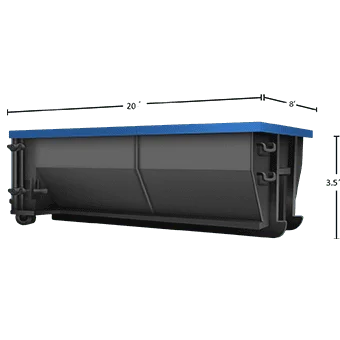
A container delivered for loading on site
A roll-off is handled by a suitable vehicle, left in an agreed position for loading and collected through the rental arrangement. Ask for the actual container offered and the materials it can accept. The ordinary dumpster page explains waste selection in more detail.
If a loading door is part of the offered model, include the space needed to open and use it. Confirm orientation with the receiving contact instead of assuming the driver can turn a loaded container later.
Allow room for the handling operation
The space occupied while loading or unloading the container is different from the container’s resting footprint. Describe the route into the property, turning space, surface and overhead obstacles so the provider can assess its equipment approach.
Keep this area separate from restroom entrances and pedestrian access. A container that fits on the ground can still be unsuitable if the vehicle cannot place or retrieve it safely.
Load for a successful collection
Follow the agreed fill, weight and material instructions, and keep items within the required loading limits. Do not leave waste beside the container expecting collection of loose material to be included. Ask about any uncertain load before pickup.
Leave the removal route clear of cars, stored materials and later project work. If you need another container or an exchange, request it with the expected loading progress rather than waiting until access is blocked.
Confirm the complete hire
Send the address, dates, waste description and proposed position. Ask for the container specification, transport, rental period, collection and change terms. Availability and handling suitability are confirmed for the actual site and vehicle arrangement.